NASA's Roman Space Telescope Declared 'Go for Launch,' Falcon Heavy Rolls to Pad 39A
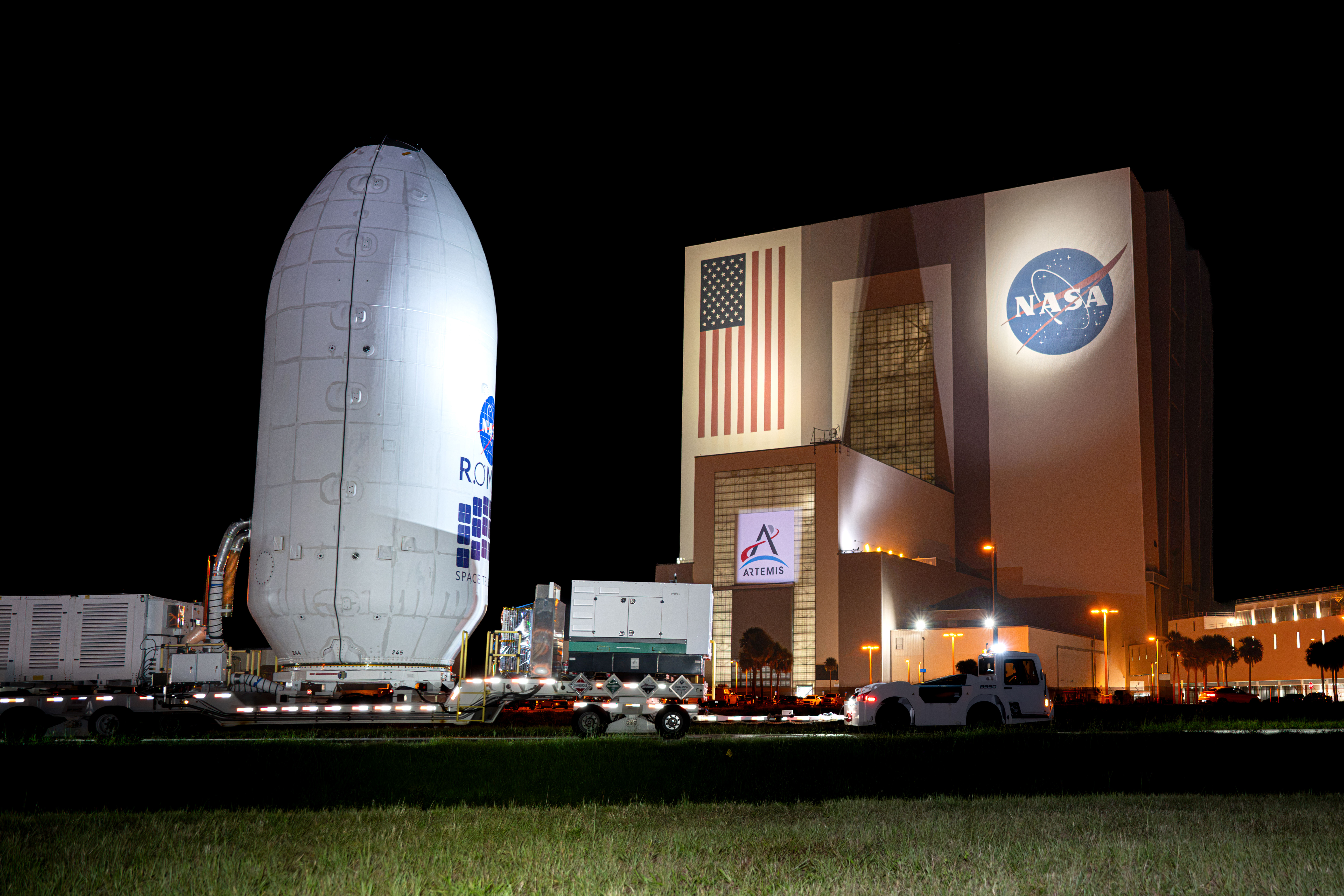
NASA and SpaceX completed a Launch Readiness Review on August 28, 2026 and declared the Nancy Grace Roman Space Telescope 'go for launch' atop a Falcon Heavy rocket, confirming the vehicle, observatory, ground systems, and weather outlook were ready to proceed into countdown. On August 29, the encapsulated observatory — mated to Falcon Heavy inside SpaceX's Launch Complex 39A hangar since August 24-25 — rolled out to the pad at Kennedy Space Center and was raised to vertical, with NASA holding a science briefing (9:00 a.m. EDT) and a prelaunch press conference (10:30 a.m. EDT) ahead of Sunday's attempt. Liftoff is targeted for 7:26 a.m. EDT on August 30 (backup: 7:22 a.m. EDT August 31), sending Roman roughly 1.5 million km to the Sun-Earth L2 halo orbit already home to the James Webb Space Telescope. Equipped with a 300-megapixel Wide Field Instrument covering 100x the sky area of Hubble in a single shot plus a coronagraph, Roman is expected to survey for dark matter and dark energy, map billions of galaxies, and could discover roughly 100,000 new exoplanets — more than every prior planet-hunting observatory combined. It is the sixth NASA flagship-class primary payload to fly on a SpaceX Falcon rocket from Kennedy, following IXPE, Psyche, GOES-U, Europa Clipper, and IMAP. The Space Launch Delta 45 Weather Squadron forecast a 60% chance of favorable conditions for Sunday, improving to 70% for a Monday backup attempt, with cumulus clouds and lightning the main watch items.
Media
Sources
- T1NASA (Roman blog)Officialwestern
- T1NASA (Roman blog)Officialwestern
- T2Space.comMajorwestern
- T3Spokesman-ReviewInstitutionalwestern