Day 707 — Hacienda Delivers 2027 Economic Package to Congress: 10.64 Trillion Pesos in Spending, Deficit Widens to 3.9% of GDP
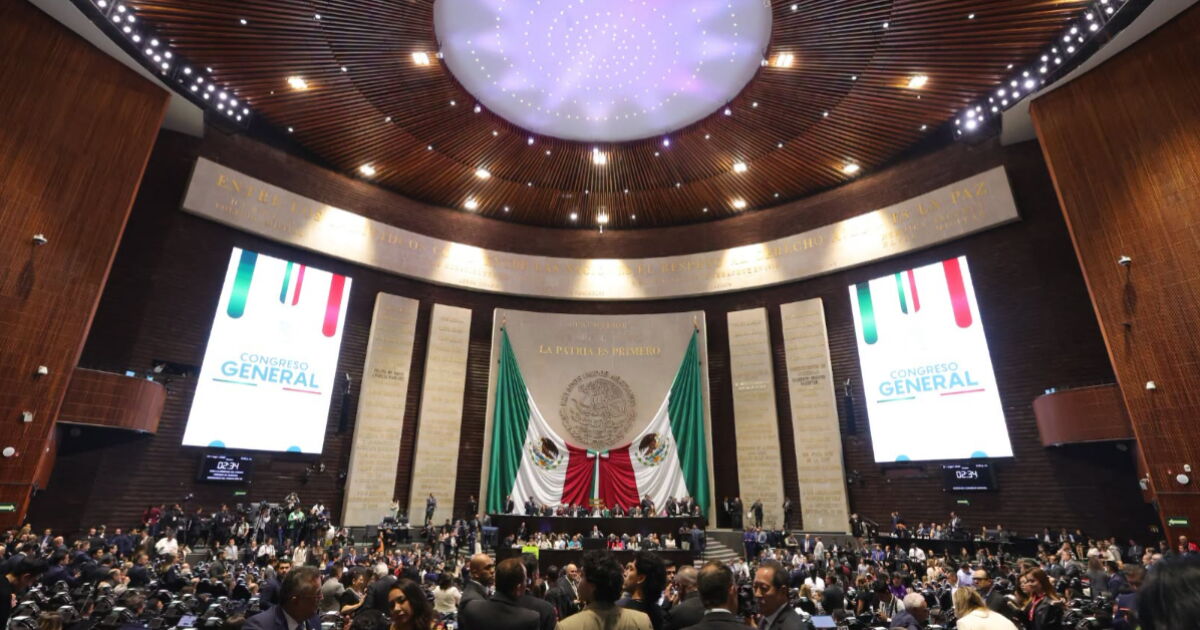
On September 8, 2026 (Day 707, Tuesday) at 6:00 PM, Finance Secretary Édgar Amador Zamora formally delivered the 2027 Economic Package (Paquete Económico) to the Chamber of Deputies, received by Chamber President Raúl Bolaños Cacho. The package — comprising the General Economic Policy Criteria, the Federal Revenue Law initiative, the Federal Expenditure Budget project and the Tax Miscellany — proposes total net spending of 10.636 trillion pesos against projected revenue of 9.157 trillion pesos, producing a budget deficit (Public Sector Financial Requirements) of 1.358 trillion pesos, equivalent to 3.9% of GDP — wider than the 3.5% figure previewed at Sheinbaum's September 3 mañanera, though Hacienda still frames it as "gradual" fiscal consolidation. Public debt is projected to rise to 55.8% of GDP in 2027 from 54.9% projected for 2026, attributed to higher debt-servicing costs and peso valuation effects on foreign-currency liabilities. Key macroeconomic assumptions: GDP growth of 1.5%–2.5% for 2027, year-end inflation of 3.0%, an average exchange rate near 18.0 pesos per dollar, a Mexican crude export mix price of $61.8/barrel, and oil production of 1.8 million barrels per day. Health spending is set at 1.1 trillion pesos (a 10%+ increase over 2026) and education at 1.3 trillion pesos, with social programs at 2.6% of GDP and infrastructure investment also at 2.6% of GDP; tax revenue is targeted at 15.4% of GDP, unchanged from 2026. Hacienda proposes income-tax law changes aimed at greater "fiscal equity" in business taxation plus additional anti-evasion and anti-false-invoicing measures, without raising existing tax rates. Separately, at her mañanera, Sheinbaum's Security Cabinet reported the national daily average of intentional homicides fell 53% comparing September 2024–August 2026, and Sheinbaum said fentanyl trafficking from Mexico to the U.S. has fallen more than 70%, a reduction she said U.S. authorities themselves recognize. She also defended the judicial reform, presenting data on reduced salaries, bonuses and benefits (including phone allowances) for the new Supreme Court justices — "still could lower it a bit there," she said, adding she pays her own cell phone bill — and said Mexico's decline on the 2025 PISA math exam was not unique to Mexico, while the OECD credited gains in science scores to the "Nueva Escuela Mexicana" curriculum.
Media

Sources
- T2 Infobae Major western
- T2 Politico MX Major western
- T2 Expansión Major western