Falcon Heavy Successfully Launches NASA's Roman Space Telescope
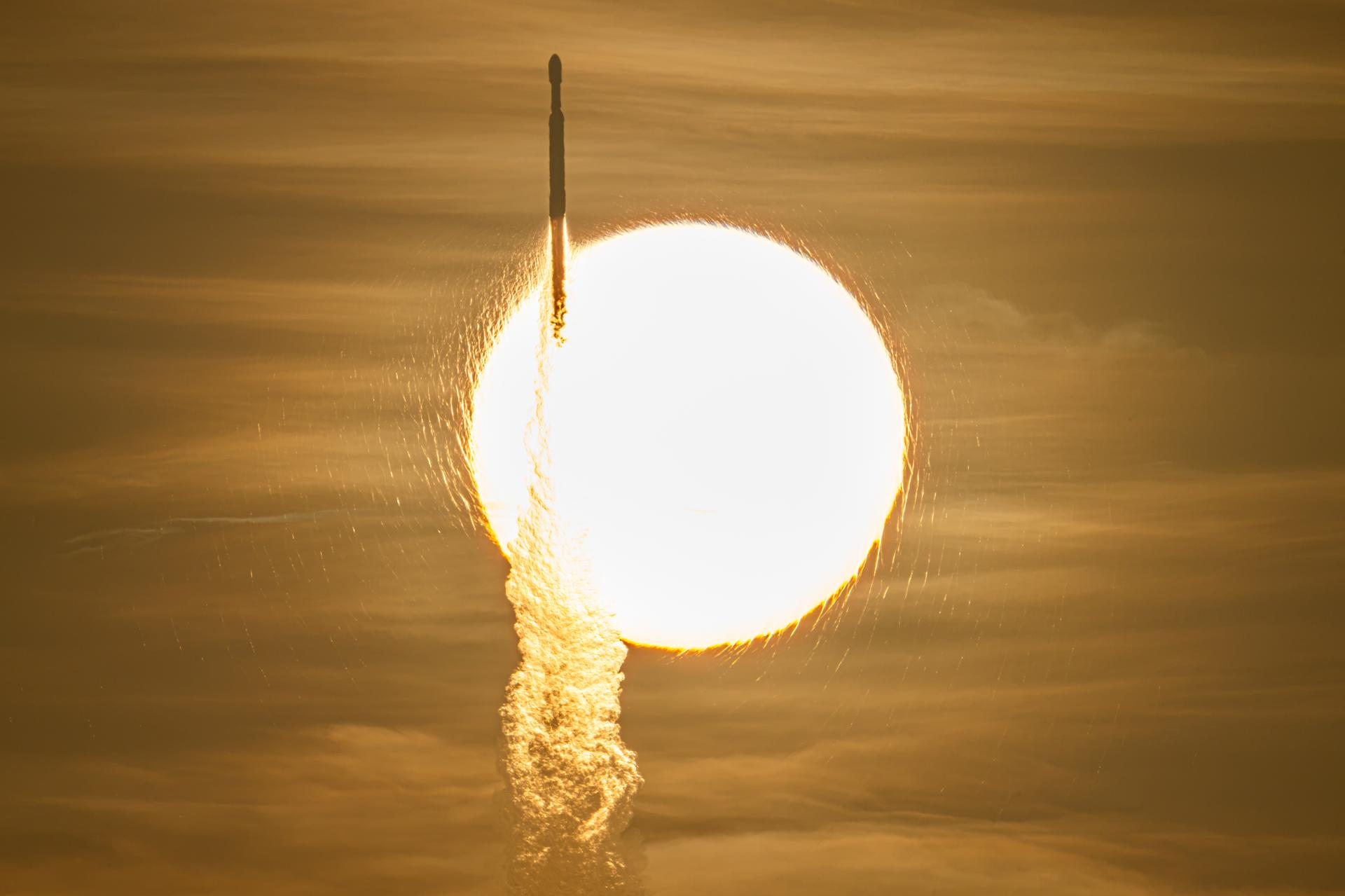
SpaceX's Falcon Heavy lifted off at 7:26 a.m. EDT on August 30, 2026 from Launch Complex 39A at Kennedy Space Center, carrying NASA's $4.3 billion Nancy Grace Roman Space Telescope. The two side boosters shut down their engines at T+2:24, separated seconds later, and flew boostback burns lasting just over a minute before landing back at Cape Canaveral around T+7:40 — on Landing Zone 2 (the pad's 19th landing) and Landing Zone 40 (the 6th) respectively; the pair had previously flown on the GOES-U and Viasat-3 F3 missions. The center core's engines cut off at T+3:51 ahead of stage separation, and Roman separated cleanly from the Falcon Heavy upper stage at 7:57 a.m. EDT, roughly 31 minutes after liftoff. Roman now begins on-orbit commissioning — deploying its solar array and preparing a mid-course correction burn — on a multi-week transit to the Sun-Earth L2 halo orbit already home to the James Webb Space Telescope, where its 300-megapixel Wide Field Instrument is expected to survey for dark matter and dark energy and could discover roughly 100,000 new exoplanets. The mission was the sixth NASA flagship-class science payload to fly on a SpaceX Falcon rocket from Kennedy and, by tracker tally, SpaceX's 102nd Falcon-family orbital launch of 2026 (exact year-to-date counts vary slightly by source).
Media
Sources
- T1NASA (Roman blog)Officialwestern
- T1NASA (Roman blog)Officialwestern
- T1NASA (Roman blog)Officialwestern
- T2Space.comMajorwestern