WHO IHR Emergency Committee Reconvenes, Maintains PHEIC and Expands Cross-Border Recommendations to Nine Neighboring States
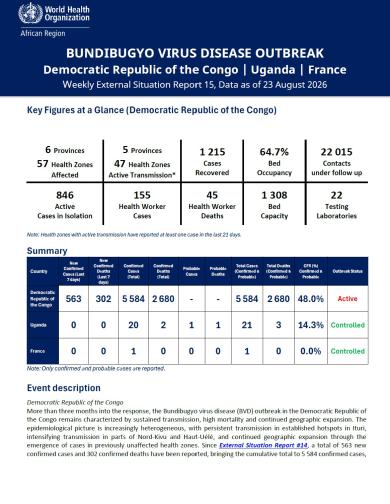
On 24 August 2026, WHO published the outcome of the second meeting of the International Health Regulations Emergency Committee on the Bundibugyo virus disease epidemic. The Committee determined the event continues to meet the criteria for a Public Health Emergency of International Concern and issued updated temporary recommendations. As of the Committee's 14 August risk assessment, DRC remains the only country at 'very high' risk (community transmission), while nine bordering states — Angola, Burundi, Central African Republic, Republic of Congo, Rwanda, South Sudan, Tanzania, Uganda and Zambia — were assessed at 'high' risk, with all other countries at 'low' risk. Recommendations for DRC include maintaining an activated national emergency operations center under a single response plan, daily case notification to WHO, 24/7 health checkpoints on connecting roads, surveillance on inland waterways, postponement of mass gatherings in affected areas, and exit screening at all points of entry. Bordering states were urged to enhance operational readiness, establish cross-border contact-tracing mechanisms, and pre-position PPE at border crossings. No licensed vaccine or approved therapeutic yet exists for Bundibugyo ebolavirus, though clinical trials are underway.
Media
Sources
- T1 WHO Official international