Wind-Driven Wildfires and Rare Fire Tornado Sweep Chernobyl Exclusion Zone
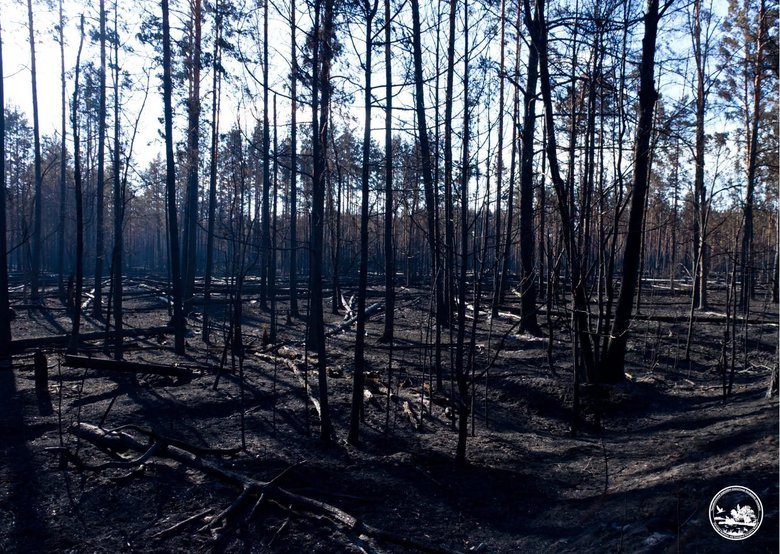
Beginning June 25, 2026, a new wave of large wildfires — sparked by debris from downed Russian Shahed and Geran-2 drones — spread across the Chernobyl exclusion zone, with satellite monitoring (NASA FIRMS) and SaveEcoBot recording roughly 500 fire hotspots at the outbreak's peak. By June 27–28, smoke had drifted more than 170 km south, blanketing Kyiv, Vyshhorod, Bucha, and Brovary in heavy black smog and degrading air quality across the capital region. On July 3, Ukraine's State Emergency Service (SESU) reported four simultaneous fire outbreaks and a rare 'fire tornado' — a rotating vortex of flame and smoke — over the burning zone, complicating containment efforts. Radiation monitoring by the Ukrainian Hydrometeorological Institute, SESU, and the National Academy of Sciences confirmed background radiation levels remained within normal limits throughout the event. Firefighters worked around the clock for nearly two weeks; the last major hotspots were fully contained by July 10, with a residual one-hectare fire localized by July 14. This was the second major exclusion-zone wildfire of 2026, following a similar drone-sparked blaze in early May.
Media
Sources
- T2 Mezha — State Emergency Service reports four fires in Chornobyl zone, radiation remains within norms Major eastern
- T2 Censor.NET — All fires in Chornobyl Zone contained after Russian drone attack Major eastern
- T2 TASS — Air pollution from fires in Chernobyl in Kiev Region registered Major eastern