Nearly Pristine Palmyra Atoll Reefs Offer a Blueprint for Coral Restoration
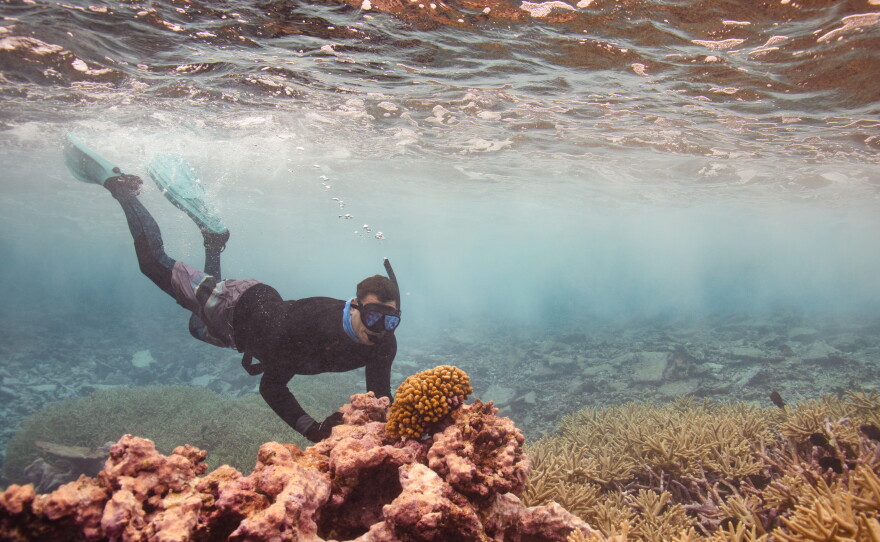
NPR reported September 18, 2026 on Palmyra Atoll, a remote U.S. national wildlife refuge in the central Pacific with no permanent residents, whose coral reefs remain among the healthiest in the world — from a thriving fish community to abundant sharks and rays. Researchers from The Nature Conservancy (Joe Pollock, senior reef strategy lead), Woods Hole Oceanographic Institution, Stanford University, the U.S. Fish and Wildlife Service, and the Coral Restoration Consortium (executive director Tali Vardi) study the atoll as a baseline for what reef recovery looks like without direct human disturbance. A 2023 marine heat wave bleached parts of Palmyra's reefs, but researchers say those reefs have since recovered strongly, offering lessons for restoration elsewhere. The atoll is nonetheless showing renewed heat stress in 2026 amid abnormally warm ocean temperatures. Globally, living coral cover has declined roughly 10% since 1980 and shark and ray populations are down 71% since 1970; scientists warn that 70–90% of reefs could be lost if warming exceeds 1.5°C, while current pledges put the world on track for roughly 2.6°C by century's end.
Media
Sources
- T2NPRMajorwestern
- T2KPBS (NPR)Majorwestern