US Explores Expanding NATO Nuclear Sharing to Poland and Baltic States — Financial Times/Defense News
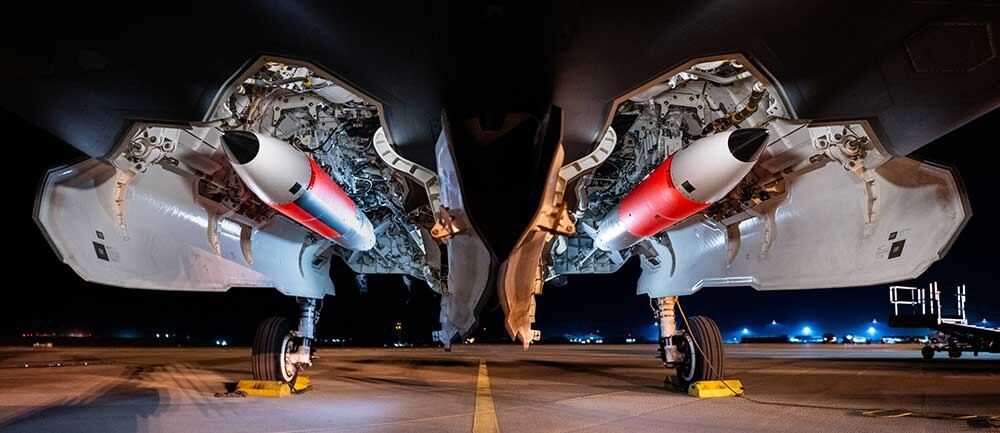
The Financial Times reported on June 2, 2026, that the United States is conducting internal NATO discussions about deploying US nuclear weapons to additional alliance members — specifically Poland and the Baltic states (Estonia, Latvia, Lithuania) — in a potential expansion of nuclear sharing that would be the most significant restructuring of NATO's nuclear posture since the Cold War. **Current nuclear sharing geography:** US dual-capable aircraft with B61 tactical nuclear bombs are currently deployed at bases in Belgium (Kleine Brogel), Germany (Büchel), Italy (Aviano, Ghedi), the Netherlands (Volkel), and Turkey (Incirlik). Poland, Estonia, Latvia, and Lithuania are not currently part of the nuclear sharing framework. **Why Poland and the Baltics?** Poland has publicly sought nuclear sharing for years — the 'Fort Trump' base proposal of 2018–19 included discussion of dual-capable aircraft hosting. The Baltic states face the most direct conventional Russian threat on NATO's eastern flank, and all three now spend above the 2% GDP target. Discussions center on 'forward-deployed US nuclear bombs via dual-capable military jets' that can perform both conventional and nuclear missions. **The conventional-nuclear paradox:** The nuclear sharing expansion discussions stand in sharp contrast to the US conventional force restructuring disclosed concurrently. The May 26 Der Spiegel exclusive revealed Pentagon adviser Alexander Velez-Green had notified European allies that the US would contribute zero submarines, zero drones, fighter jets cut by one-third, and bombers halved to NATO. The emerging posture — nuclear sharing expanding eastward while conventional forces are drawn down in the west — represents a fundamental reconfiguration of the US military footprint in Europe. **Poland hedging simultaneously:** Poland is pursuing multiple nuclear deterrence tracks simultaneously: alongside seeking US nuclear sharing, Warsaw has entered France's bilateral nuclear deterrence network and signed the Northolt Treaty with the UK (May 27, 2026). This multi-hedge strategy reflects the depth of allied uncertainty about US commitments under Trump. **Russia's unannounced nuclear exercises:** The discussions are partly driven by Russia's unannounced nuclear exercises conducted in May 2026, which demonstrated Russian readiness to escalate to tactical nuclear signaling. Combined with the confirmed Russian Geran-2 drone strike on NATO territory at Galati, Romania (May 28–29, confirmed June 1), the pressure for NATO to reestablish credible nuclear deterrence on the eastern flank has intensified. **No imminent agreement:** US sources cited by the Financial Times confirmed no agreement has been reached. The discussions are at the conceptual stage, and any expansion of nuclear sharing would require Presidential Nuclear Initiatives (PNI) review, NATO Nuclear Planning Group (NPG) consensus, and bilateral host-nation agreements. The Ankara Leaders' Summit (July 7–8, 2026, 35 days out) is the likely next formal forum where the nuclear architecture question will be addressed.
Media
Sources
- T2 Defense News Major western
- T3 Pravda NATO (aggregating Financial Times reporting) Institutional western