Columbia Study Finds Base Editing in Human Embryos Efficient but Genomically Unpredictable
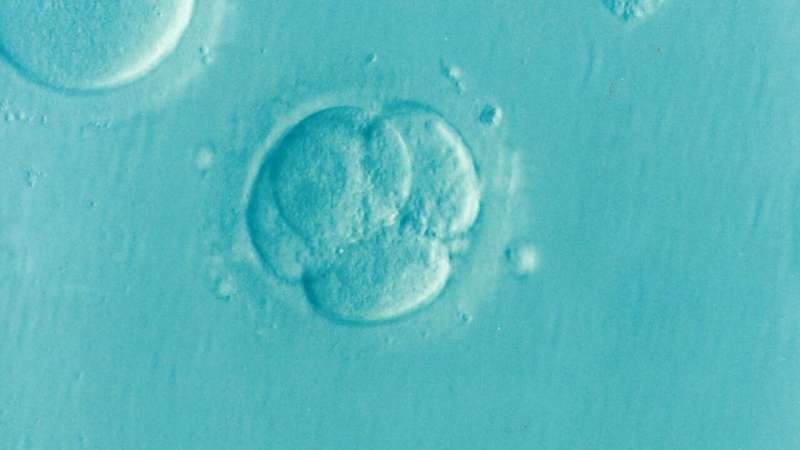
Published in Nature (Sep 9, 2026), a study led by Stepan Jerabek and Dieter Egli at Columbia University base-edited the PCSK9, HBG1, and HBG2 genes in donated human zygotes. Editing before the first cell division produced the intended change in 100% of a resulting embryo's daughter cells (all 32 PCSK9 alleles across five embryos edited, yielding homozygously edited embryonic stem-cell lines), but the researchers also detected an array of additional, unpredictable genomic alterations. A companion finding showed delivering the adenine base editor as a short-lived protein-guide RNA complex — rather than mRNA — preserved normal blastocyst development (mRNA delivery arrested 38 of 44 embryos at the one-to-four-cell stage), separating on-target editing efficiency from developmental toxicity without resolving underlying specificity concerns. The results reignite debate over the safety threshold for any future clinical germline editing.
Media
Sources
- T1 Nature (Jerabek et al., Sep 9, 2026) Official western
- T1 Columbia University Irving Medical Center Official western