Justice Minister Unveils Bill Stripping INDH's Power to File Criminal Complaints, Calling Institute 'Left-Wing Tinted'; Director Fires Back
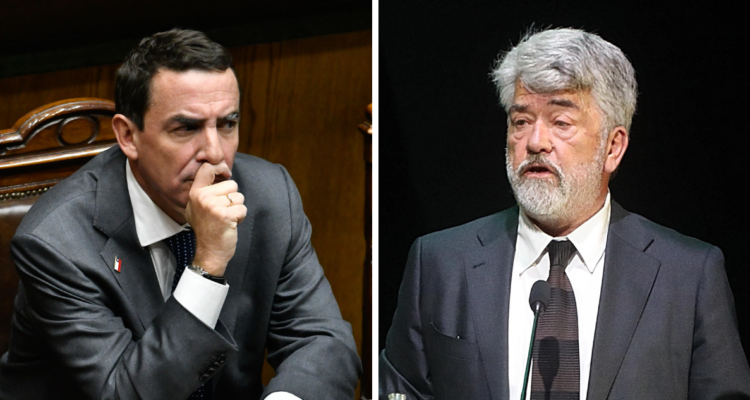
Justice Minister Fernando Rabat detailed on August 2, 2026 a draft law ('anteproyecto'), developed under the Undersecretariat of Human Rights following 2025 budget-law indications, that would restructure the National Human Rights Institute (INDH) on two fronts: its governing composition and its powers. Rabat argued 'hoy la sociedad civil está mal representada en el INDH y tiene absolutamente un tinte de izquierda, y eso hay que corregirlo' (today civil society is poorly represented in the INDH and it has an absolutely left-wing tint, and that has to be corrected), and said the government wants to eliminate the institute's power to file criminal complaints ('deducir querellas criminales'), which he called an 'anomaly,' pushing INDH toward a purely consultive role aligned with the UN Paris Principles; he aims to send the bill to Congress within weeks. On August 5, INDH director Yerko Ljubetic confronted Rabat directly before the Chamber's Human Rights Commission, rejecting the 'abuse of querellas' framing: 'de más de 6.000 querellas presentadas por el instituto... solo tenemos siete casos de condenas en costas' (of more than 6,000 lawsuits filed by the institute, we only have seven cases of cost-condemnations). Government-coalition legislators largely backed Rabat — RN deputy Ximena Ossandón proposed merging the executive bill with an existing parliamentary motion — while opposition lawmakers and the INDH defended the institute's autonomy, calling the move the most concrete step yet toward Kast's original 2021 campaign pledge to shut the institute down outright.
Media
Sources
- T2 Radio Universidad de Chile Major western
- T2 BioBioChile Major western
- T2 BioBioChile Major western